How to get your business recommended by ChatGPT
Being recommended is different from being cited. A model names the business it can verify from several independent sources. What that means in practice.

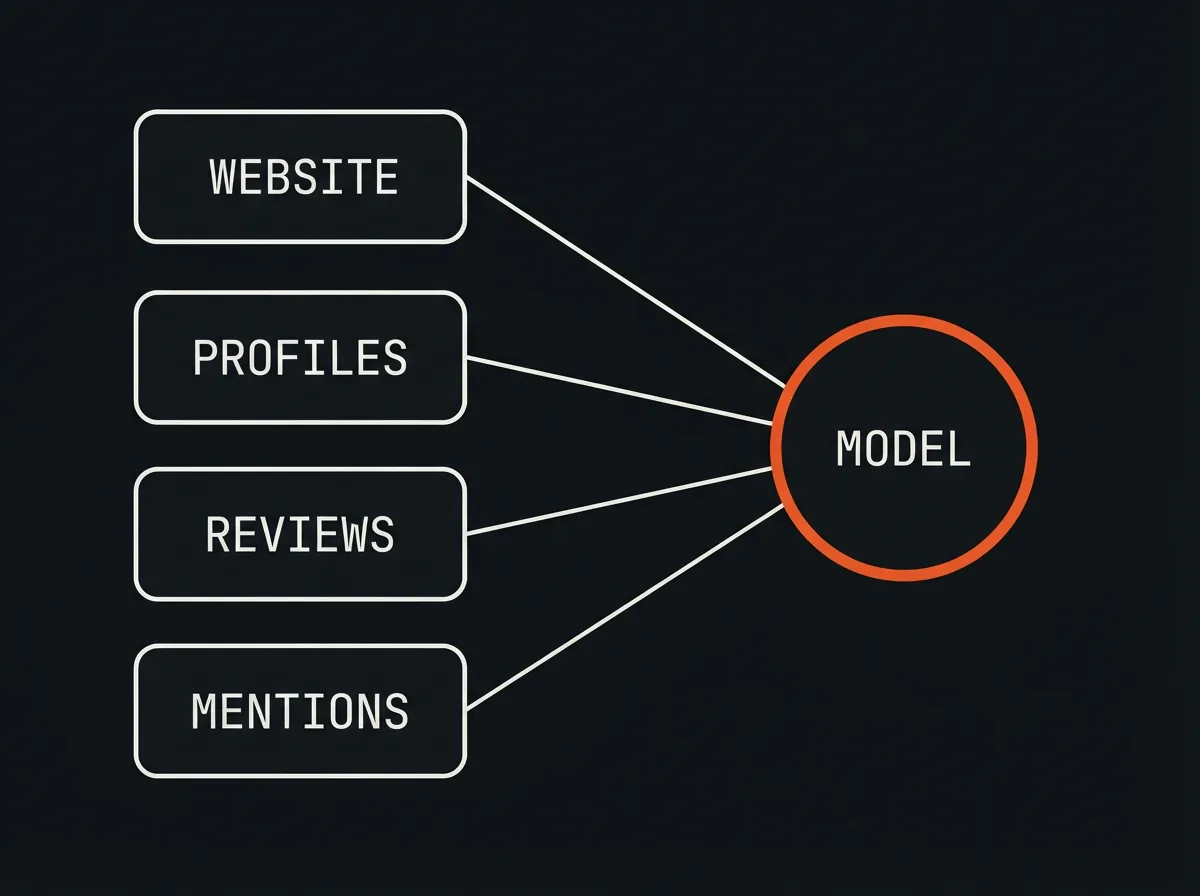
ChatGPT recommends a business when it can find that business described consistently, across several independent sources, as a good answer to the request in front of it. Your website is one of those sources, and it is often not the one that decides.
That is the key difference from getting your content cited. A citation quotes your page to answer a question. A recommendation names your business as an option when someone asks who they should use, and that depends on what the rest of the web says about you.
Recommendation is not the same as citation
When someone asks an assistant how retrieval-augmented generation works, it looks for a clear passage to quote, and the structure of your content decides whether that passage is yours. We covered that in how to get cited by ChatGPT, Perplexity, and Google AI Overviews. When someone asks for the best engineering firm for a warehouse extension, or a good Shopify developer in Dubai, the assistant is choosing between businesses, and it weighs evidence about them rather than the quality of any one page.
The two overlap, and the same site can win both. But a business can have excellent content and still never be recommended, because nothing outside its own site confirms it is a credible choice.
What a model looks for before it names you
Assistants look for consistency and corroboration. Is the business described the same way on its website, its Google Business Profile, its LinkedIn page, and the directories in its industry? Do reviews on the platforms customers use say roughly the same thing? Is it mentioned in lists, articles, and forum threads by people who are not the business itself? Each independent source that agrees makes the recommendation safer for the model to give.
Inconsistency works against you. A different business name on the profile and the site, an old address in a directory, or a description that says 'marketing agency' in one place and 'software company' in another gives the model reason to doubt it has the right business.
Answer the questions buyers ask
Recommendation queries are shopping questions: which is best for this, which is right for someone like me, what is the difference between these two. If your pages only list features and never answer those questions, an assistant has nothing that connects your business to the request.
That was the problem at The Fragrance Square. Their product pages listed attributes and answered none of the questions buyers actually ask assistants. We restructured product and guide content around scent notes, comparisons, and buying guidance, written so it could be quoted. Their products began appearing in assistant recommendations for scent-family queries, and traffic from AI answers rose 31%.
Get named where the model reads
The strongest signals sit outside your control, which is why they carry the most weight. A mention in an industry roundup, a client describing your work on a forum, a listing in a respected directory, or a comparison article that includes you all count as independent confirmation. None of it can be bought cleanly. It can be earned, mostly by doing work worth mentioning and making it easy for satisfied clients to say so where your buyers look.
Tell the model who you are
Structured data removes guesswork. Organization schema on your site states your name, what you do, where you operate, and which profiles elsewhere belong to you, so a model can connect your website to your LinkedIn page, your directory listings, and your reviews. A clear about page and service pages that say plainly who you serve do the same job in prose.
For AMN Engineering, a rebuilt site with content restructured into clear sections and structured data was cited by AI assistants for named engineering-service queries within weeks. The firm had been around for years. What changed was how easy it became for a model to understand what it does.
How to check where you stand
Ask the assistants the questions your customers ask, in the words they would use: the best firm for this job, a good supplier for that product, in your city or market. Try ChatGPT, Perplexity, and Google's AI Mode separately, because they draw on different sources. Note who gets named and what the assistant says about them. Repeat it monthly, because the answers move.
The gap between you and the businesses that do get named is usually specific: a missing profile, thin reviews, no comparison content, or an inconsistent description. Closing that gap is the work of AI search visibility, and it tends to compound, since every new confirmation makes the next recommendation more likely.
Questions
Why does ChatGPT recommend my competitors but not my business?
Usually because more independent sources describe them consistently: reviews, directory listings, articles, and forum mentions. Assistants recommend the businesses they can corroborate, not only the ones with the best website.
Do reviews affect whether ChatGPT recommends a business?
They help. When a question asks for the best or most trusted option, assistants draw on what others say about a business, and consistent reviews across the platforms your customers use are one of the clearest signals of that.
How long does it take to appear in ChatGPT recommendations?
It depends on how much already exists about your business. With the groundwork in place, changes can show within weeks: one engineering firm we rebuilt was cited for named service queries within weeks of relaunch.
SEO ranks a page for a person to click. GEO gets a passage quoted by a model. What actually differs, and what to do about it.
A practical checklist for becoming the source an assistant quotes, platform by platform.
A plain-text map for AI crawlers. What it does, what it does not, and an honest read on whether to bother.